Hero Background
REGISTRY_PATH // SECURE_NODE

Pilot License

Technical_Brief // INFORMATION

Overview of Certification

Pilot examining aircraft
Pilot licensing or certification refers to permits to fly aircraft that are issued by the Civil Aviation Authority (CAA) in each country, establishing that the holder has met a specific set of knowledge and experience requirements. The Civil Aviation Authorities of all countries operate under the framework of The International Civil Aviation Organization (ICAO), which is a UN specialized agency. ICAO works with the Convention’s 191 Member States and global aviation organizations to develop international Standards and Recommended Practices (SARPs) which States reference when developing their legally-enforceable national civil aviation regulations. Pilot licensing includes taking a rigorous flying test. The certified pilot can then exercise a specific set of privileges in that nation’s airspace. In the United States, pilot certification is regulated by the Federal Aviation Administration (FAA). In India, the Directorate General of Civil Aviation (DGCA) is the issuing authority. Different types of pilot certificates and ratings are explained as under.
End of Briefing// SYNC_COMPLETE
Training_Modules // Certification_Path

License Classification

The DGCA and international bodies recognize four primary tiers of flight certification. Select a classification below to analyze the technical requirements for India and abroad.

Student Pilot License (SPL)
LIC_REF: 01

Student Pilot License (SPL)

This is the first pilot license one would need to fly an airplane as a pilot-in-command.

Learn More
Private Pilot License (PPL)
LIC_REF: 02

Private Pilot License (PPL)

A Private Pilot License (PPL) is the minimum required for a pilot to take passengers up with them.

Learn More

Commercial Pilot License (CPL)
LIC_REF: 03

Commercial Pilot License (CPL)

A commercial pilot license (CPL), is a qualification that permits the holder to act as a pilot of an aircraft and be paid for their work.

Learn More
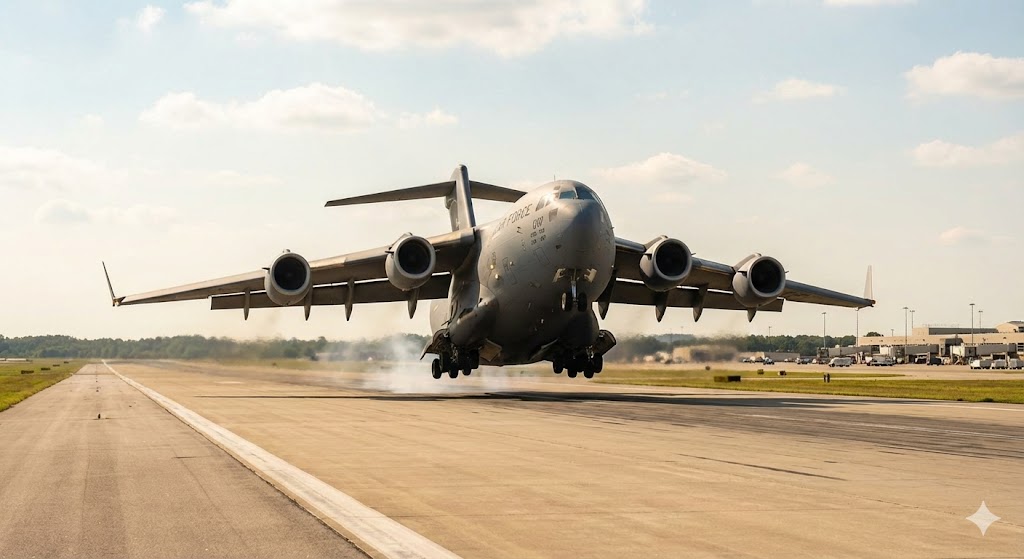
Airline Transport Pilot License (ATPL)
LIC_REF: 04

Airline Transport Pilot License (ATPL)

This is the acme of all the pilot certificates or licenses. To be a Captain with an airline, you would need to have an Airline Transport Pilot License (ATPL)

Learn More
End_of_Registry
Technical_Brief // INFORMATION

Student Pilot License (SPL)

Student Pilot License
This is the first pilot license one would need to fly an airplane as a pilot-in-command. When you are flying and receiving training from a flight instructor, you do not need any license. However, at some point during your training your instructor would get out of the airplane and would want you to go up on your own. This is called a solo, and the first one is called the first solo. And for this solo, and all the subsequent ones, you need a student pilot license. Typically, you would need this until you reach 40-50 hours of total flight time and get your Private Pilot License (PPL). An SPL is good for 24 months, and the process to get it is pretty simple. You will also need an Pilot Medical Certificate. Usually you would get both of them together.
End of Briefing// SYNC_COMPLETE
Technical_Brief // INFORMATION

Private Pilot License (PPL)

Private Pilot License
A Private Pilot License (PPL) is the minimum required for a pilot to take passengers up with them. Once you have your PPL, you can take your family and friends up with you whenever you go fly around. You will need to take a written and a practical test to get your PPL. But it is all covered during your training as an SPL holder. A PPL in the United States does not expire. That means, once you have it, you have it forever. Of course if you do something you are not supposed to do, it can be suspended or even revoked. A private pilot licence (PPL) or, in the United States, a private pilot certificate, is a license that permits the holder to act as the pilot-in-command of an aircraft privately (not for pay). The requirements to obtain the license are determined by the International Civil Aviation Authority (ICAO), but the actual implementation varies widely from country to country. According to the ICAO, it is obtained by successfully completing a course with at least 40 hours (45 in Europe) of flight time, passing seven written exams, completing an extensive solo cross country flight (minimum cumulative solo flight time is 10 hours), and successfully demonstrating flying skills to an examiner during a flight test or checkride (including an oral exam). In the USA, pilots can be trained under Title 14 of federal code part 141 which allows them to apply for their certificate in as little as 35 hours. However, most pilots require 60–70 hours of flight time to complete training. The minimum age for a private pilot certificate is 16 for balloons and gliders, and 17 for powered flight (airplanes, helicopters, and gyroplanes). Pilots can begin training at any age and can solo balloons and gliders at age 14, powered aircraft at age 16.
End of Briefing// SYNC_COMPLETE
Technical_Brief // INFORMATION

Commercial Pilot License (CPL)

Commercial Pilot License
A commercial pilot license (CPL), is a qualification that permits the holder to act as a pilot of an aircraft and be paid for their work. The basic requirements to obtain the license and the privileges it confers are agreed internationally by International Civil Aviation Organization (ICAO). However the actual implementation varies quite widely from country to country. According to ICAO, to be eligible for a commercial pilot license, the applicant must be able to read, speak, write, and understand English: already hold a private pilot license, have received training in the areas of a commercial pilot, and successfully complete the relevant written exams. To proceed in obtaining a commercial pilot license, the applicant must first obtain first-class medical certification. The JAA has several approved courses leading to the issue of a JAA commercial pilot’s license with an instrument rating without first obtaining a private pilot’s license. Upon completing those prerequisites the applicant will then receive an exam from the governing aviation body that consists of an oral and practical flight test from an examiner. Applicants for a CPL (aeroplanes) must also have completed a solo cross-country flight of at least 300 nm with full-stop landings at two airfields other than the pilot’s airfield of origin. Different types of commercial pilot certificates or licenses are issued for the major categories of aircraft: airplanes, helicopters, gyroplanes, balloons and airships. A certificate/license will contain a number of sub-qualifications or ratings. These specify in more detail the actual privileges of the license, including the types of aircraft that can be flown (single-engine or multiengine), whether flight under instrument flight rules is allowed (instrument rating), and whether instructing and examining of trainee pilots can be done (instructor or examiner rating). Some JAA states (but not the United States) restrict the use of the title ā€œCaptainā€ to CPL holders and above. In the United States, a CPL has traditionally been sufficient to be a pilot on a regularly scheduled passenger flight, while an ATPL is required to serve as the pilot in command of such a flight (14 CFR 121.437). Effective July 15, 2013, all pilots crewing U.S. airlines’ regularly scheduled passenger flights must hold an ATPL (including the co-pilot). A Commercial Pilot License (CPL) is what you would need to get a job, and get paid as a pilot. If you want to join the airlines as a pilot, this is the minimum requirement. You will need about 250 hours total flight time to get your CPL. Again there is no expiration date on this license. Just like your Private, you would need to pass a written and a practical exam to get your Commercial Pilot License.
End of Briefing// SYNC_COMPLETE
Technical_Brief // INFORMATION

Airline Transport Pilot License (ATPL)

Airline Transport Pilot License
This is the acme of all the pilot certificates or licenses. To be a Captain with an airline, you would need to have an Airline Transport Pilot License (ATPL). You need to have at least 1500 hours of flight time to qualify for this. This license does not have any expiration date either. Just to clarify, you need a Commercial Pilot License to get a job with an airline as a co-pilot or a first officer. But to become a Captain eventually, you need an Airline Transport Pilot License (ATPL). The Airline Transport Pilot Licence (ATPL) is the highest level of aircraft pilot licence, required to command aircraft over 5700 kg or with over 9 passenger seats. For ATPL (A) – The minimum flying experience required for grant of an ATPL is 1500 hrs. For ATPL (H) – The minimum flying experience required for grant of an ATPL is 1000 hrs. In each (aeroplane and helicopter) ATPL exam, there are seven parts. Each part covers one or two aeronautical subject(s) detailed in the respective syllabus. Due to the syllabus scope for each part and the time involved, each part is examined separately. Thus each of the (aeroplane and helicopter) ATPL part-exams is an individual exam.
End of Briefing// SYNC_COMPLETE
Prerequisites // Technical_Assessment

Eligibility & Skills

Eligibility Criteria

  • ā–¹Candidate whose age is above 18 years.
  • ā–¹Candidates who have passed 10+2 in science discipline with Physics and Mathematics as compulsory subjects.
  • ā–¹Candidates who have passed diploma in any engineering discipline.
  • ā–¹Candidates who have passed bachelor’s degree in science with Physics and Mathematics as compulsory subjects.

Required Competencies

Role: Airline Pilot / Co-Pilot / Flight Engineer

1. Operation and Control

Controlling operations of equipment and systems

2. Coordination

Adjusting actions in relations to others’ actions

3. Judgment and Decision Making

Considering the relative costs and benefits of potential actions to choose the most appropriate one

4. Operation Monitoring

Watching gauges, dials and other indicators to make sure that a machine is working properly

5. Active Listening

Giving full attention to what other people are saying, taking time to understand points being made

6. Systems Evaluation

Identifying measures or indicators of system performance and actions needed to improve goals

7. Critical Thinking

Using logic and reasoning to identify pros and cons of alternative solutions

8. Monitoring

Assessing performance of self, other individuals or organizations to make improvements

9. Instructing

Teaching others how to do something

10. Speaking

Talking to others to convey information effectively

11. Reading Comprehension

Understanding written sentences and paragraphs in work related documents

12. Mathematics

Using Mathematics to solve problems

13. Writing

Communicating effectively in writing as appropriate for the needs of the audience

14. Science

Using scientific rules and methods to solve problems

15. Time Management

Managing own time and others’ time effectively

16. Complex Problem Solving

Identifying complex problems and reviewing related information to develop options

17. Active Learning

Understanding the implications of new information for current and future problem-solving

18. Quality Control Analysis

Conducting tests and inspections of products, services or processes to evaluate quality

19. Systems Analysis

Determining how a system should work and how changes in conditions will affect outcomes

Technical_Brief // NODE_SUMMARY

Pilot Ratings (IR & ME)

Pilot ratings are additional qualifications that you can add to an existing Pilot’s license to enhance your abilities as a pilot. The examples are: Instrument Rating and Multi Engine Rating.

Instrument Rating (IR)

An Instrument Rating (IR) is what’s required to be able to fly an airplane inside and through the clouds, and at times of low visibility. The training involves the pilot to learn how to fly an airplane simply by looking at flight instruments inside the cockpit. If you are on a career path to be an airline pilot then this is a must. IR is a requirement to get a job with an airline, and also to qualify for an Airline Transport Pilot. This is usually obtained after your get your Private Pilot License, and before you get your Commercial Pilot License.

Multi-Engine Rating

Most of your training will be done on single engine airplanes (SE), like Cessna and Piper. However, to qualify for an airline pilot position, you will need to be qualified to fly airplanes with multiple engines. Most airline airplanes have more than one engine. And this training is called Multi-Engine Rating (ME). Most people get their Multi-Engine Rating along with or right after their Commercial Pilot License.

Technical_Brief // INFORMATION

Flight Instructor

Flight Instructor Certification
A flight instructor is a person who teaches others to fly aircraft. Specific privileges granted to holders of a flight instructor qualification vary from country to country, but very generally, a flight instructor serves to enhance or evaluate the knowledge and skill level of an aviator in pursuit of a higher pilot’s license, certificate or rating. A person who holds a flight instructor certificate (called a ā€œcertificated flight instructorā€ or CFI) is authorized to give training and endorsements required for and relating to: a student, private, commercial or other pilot certificate; the three hours of training with reference only to instruments in preparation for a private pilot certificate, note that this does not need to be a CFII. Certain limitations are placed on the instruction a flight instructor may give. For example, flight instructors wishing to train applicants for a flight instructor certificate must have held their own flight instructor certificate for at least 24 months and must have given at least 200 hours of instruction.
End of Briefing// SYNC_COMPLETE
Technical_Brief // NODE_SUMMARY

Aircraft Type Rating

A type rating is a regulating agency’s certification of an airplane pilot to fly a certain aircraft type that requires additional training beyond the scope of the initial license and aircraft class training. What aircraft require a type rating is decided by the local aviation authority. In many countries pilots of single-engined aircraft under a certain maximum weight (5,700 kg or 12,500 lb, typically) do not require a type rating for each model, all or most such aircraft being covered by one class rating instead.

Aircraft Type Ratings

After sitting a flight test that requires a new licence to be issued, pilots can have additional aircraft type ratings added to their new licence for no extra charge. Applicants must include a completed licence amendment form, and photocopied evidence that the type rating has been issued and certified by a flight instructor in the applicant’s pilot logbook.

Starting in 2006, the Federal Aviation Administration (FAA) in the United States requires co-pilots (second-in-command, or SIC) to have a ā€˜SIC Type Rating’ for aircraft requiring a crew of two, and otherwise requires a type rating to act as pilot-in-command (PIC) to fly internationally. This is in order to remain compliant with the International Civil Aviation Organization (ICAO).

Medical Requirements

Class II Medical Assessment

This certificate is a prerequisite. It is a medical requirement specified by DGCA for students who wish to pursue Pilot training courses. There are examinations for Physical, mental, visual, and hearing requirements. This is taken by a DGCA certified physician.

Class I Medical Assessment

Anyone wishing to train for a commercial or airline transport pilot’s licence will need to obtain an initial Class 1 medical certificate. This test is country-specific. Each country has certified physicians/centres in India to conduct Class I Medical Assessment before flying to that country.