
Instrument Ratings
Introduction
Available Countries

United States of America
IR is a qualification that extends the privileges of PPL and allows a pilot to fly according to Instrument Flight Rules (IFR) with a minimum decision height for a landing of 60m (200 feet). Once you complete your Instrument Rating training, you will get your IR/SE qualification added on your FAA Private Pilot License – PPL. In case of a Multi-Engine IR, the privilege can be extended to Multi-engine operations.
Course Entry Requirements
- ▹ To be at least 3 Class Medical holder
- ▹ To be at least a PPL holder
- ▹ To be proficient in the English language
Find Answers to Your FAQs
Have questions about Instrument Rating? Contact us for frequently asked questions and detailed information about the certification process.

New Zealand
This program may be completed well within one's CPL, unless a student opts for a country-specific program, wherein the New Zealand Instrument rating is not required. Instrument Rating is when you operate/navigate the aircraft solely by looking at the instruments onboard the aircraft and radio signals from the ground. This program is mandatory for students wanting a career as an airline pilot.
The instrument rating gained on a single engine aircraft is known as SEIR and instrument rating gained on a Multi-Engine aircraft (an aircraft with more than one engine) is known as MEIR.
Program Structure
Duration: 3 months to 4 months (if done outside the CPL program)
- • 3 theory exams
- • 20 hours simulator time
- • 20 hours aircraft time and IR flight test
Qualification Requirements
- • Hold a PPL or CPL
- • Have passed CPL papers in Human Factors & Meteorology
- • Complete 40 hours flight training (20 hours may be ground simulator)
- • Complete passes in 3 theory subjects
Entry Requirements
- • Hold a PPL* or CPL
- *PPL holders must have completed two CPL papers:
- a. Human factors
- b. Meteorology

South Africa
This advance qualification can be added either on Private Pilot License or Commercial Pilot License, and will be able to fly in challenging weather conditions by solely relaying on the flight instruments. Not only will this rating significantly improve overall safety but it is a necessity for any pilot wanting to be competitive in the job market.
Requirements for Instrument Rating
The applicant for a class of type rating, in respect of a single-pilot multi-engine aero plane must have:
- • Hold a valid Commercial Pilot License or Airline Transport Pilot License
- • Hold a valid night rating, unless such rating is an integral part of the pilot license (i.e. CPL)
- • Hold a valid Class II aviation medical certificate
- • Have passed to General Radio and Instrument rating theoretical examinations
- • Hold a general radio license certificate
- • Have completed at least 50 hours flight time as PIC (10 hours on the category of aircraft for IR)
- • Have completed 40 hours instrument flight training under instruction (at most 20 hours may be in an FSTD)
Multi-Engine Requirements
In the case of an instrument rating for a multi-engine aeroplane, at least 5 hours of the instrument training must be conducted in a multi-engine aeroplane and shall be additional to the training towards an initial multi-engine class rating. A maximum of 3 of the 5 hours may be completed in an FSTD approved for this purpose.

Philippines
The most significant value of flying under IFR is the ability to fly in instrument meteorological conditions (such as inside clouds and low visibility situation). It requires additional training and instruction beyond what is required for a private pilot certificate or commercial pilot certificate, including rules and procedures specific to instrument flying, additional instruction in meteorology, and more intensive training in flight solely by reference to instruments.
Elite Training Experience
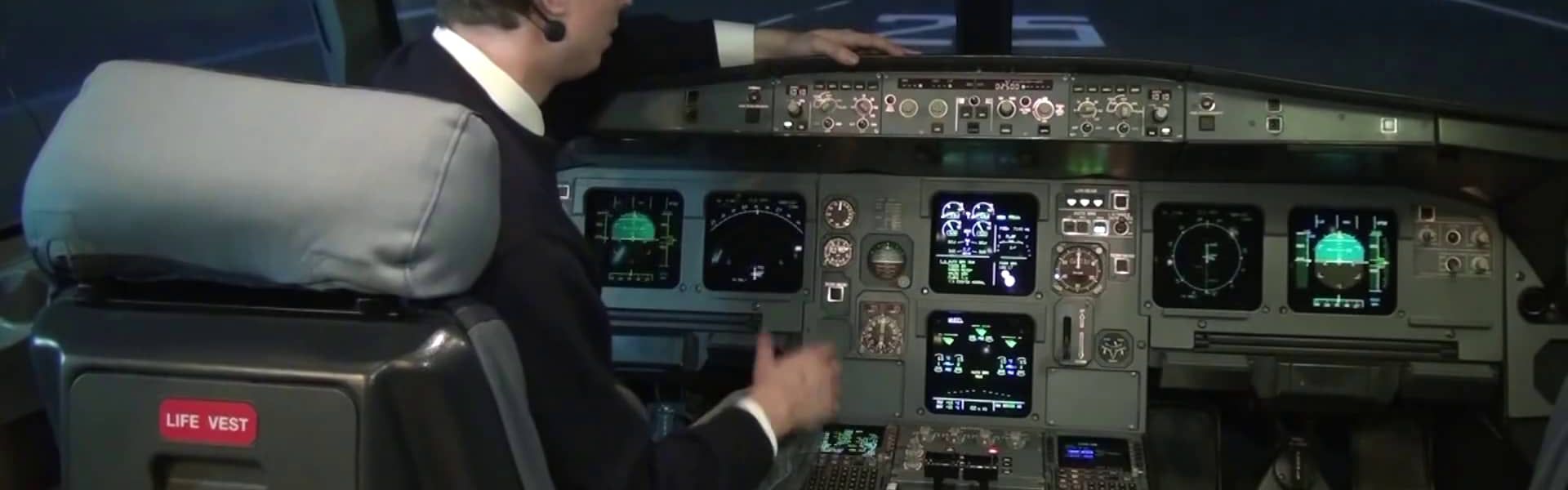
Our ELITE PI-135 and REDBIRD FMX flight simulators make you understand and interpret ground knowledge in a more in-depth manner. With the instructor guiding the students in details on every aspect of Instrument Flying, we are proud to offer a personalized teaching methodology.
Our simulator flight training is an unbelievable experience, which makes actual instrument flying more enjoyable and successful.
Training Package
Total Instrument Time: 40 Hours
- • Actual Instrument (Cessna 172): 20 hours
- • Simulator (ELITE PI-135 & Redbird FMX): 20 hours
- • Duration: 3 months
- • Ground Schooling: 20 hours
Training Aircraft
- • Cessna 172
- • ELITE PI-135 Simulator
- • Redbird FMX Simulator

Australia
The course equips you with the skills and experience required to fly under instrument conditions for domestic and international airlines, emergency services and air ambulance. You will train with our experienced instructors to build and develop advanced-level pilot licence ratings and endorsements to enhance your career opportunities.
Instrument rating consists of two distinct components – flight training and theory training. These are taught concurrently so you will master the practical while engaged with the theoretical.
Entry Requirements
- • 17 years of age upon enrolment, 18 years of age to sit a flight test
- • Hold a Commercial Pilot License
- • An aircraft instrument endorsement (same category as flight test aircraft)
- • At least a 2D instrument endorsement (can include 3D endorsement)
Aeronautical Experience Required
In aircraft of the same category that the flight test is to be conducted in:
- • 50 hours cross-country flight time as pilot-in-command
- • 40 hours of instrument time, including:
- - At least 10 hours of dual instrument time
- - Plus 20 hours of instrument flight time OR
- - 10 hours of instrument flight time if training done in flight simulator
Theory Training
International Students
A pass in an International English Language Testing System (IELTS) with an overall grade of 6.0 or equivalent.
Training Aircraft

United Arab Emirates
Entry Requirements
- • High school or equivalent as minimum education
- • Good command of the English language
- • Minimum age 17 year to enrol for the course and 18 years to obtain a licence
- • Class I Medical certificate by a UAE GCAA physician
- • All students required by law to get security clearance prior to commencing flight training in the U.A.E
- • Personal interview with the flying school enrolment committee
Security Clearance
Sunsea with its partner flying school will apply for your security clearance when all your documents with course application fee received.